Thursday, March 26, 2009
One Man a Kingfish (6/12/06)
Y'all listen up while we relate the story of the Kingfish. Some o' you know him as Huey Long, but down in Lou'siana, they still call him by his nickname. Huey ran the state back in the '30s, even after he was elected to the Senate -- an' this was after he'd been Gov'nuh for four years, runnin' on the slogan, "Every Man a King." Some say the Kingfish was a dictator, but there are just as many who think he was a real hero to the common folk; he gave 'em roads an' bridges an' schools an' free textbooks. Now, if there was one thing Huey could do, without dispute, it was talk; he could talk a mule into doing the tango. In fact, in 1935, he made the second-longest speech ever heard in the Senate -- took two days to finish. Speakin' of finishes, the Kingfish met his when a political opponent shot him -- or did he?

"Fine" Art (6/8/06)
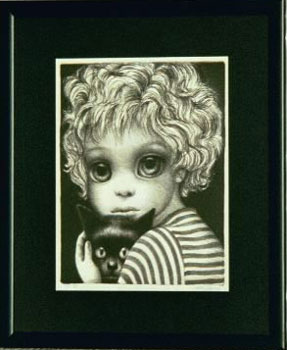
The 20th century produced many great artists. In the 1910s, there was Picasso. In the 1940s, it was Jackson Pollock. And the 1960s? Well, the '60s gave us LeRoy Neiman and Margaret Keane. Neiman is best known for sporting a ginormous mustache, painting brightly colored pictures of athletes, and never letting go of his cigar. Keane stunned the art world with her heart-rending portraits of children with eyes the size of Buicks. While both were successful, neither painter managed to find a place in the Sears Vincent Price Gallery of Fine Arts, which seemed to have some standards, even if they were questionable at times. It wasn't until Thomas Kinkade hit the scene in the 1990s that we found an artist who could really cram his work down the throats of Americans. Maybe the success of these artists is surprising to some, but as H.L. Mencken once (almost) said, "No one ever went broke underestimating the good taste of the American public."
Mrs. Parker and the Round Table (6/7/06)
In the 1920s, there was no group smarter or funnier than the Algonquin Round Table (aka "the Vicious Circle"). Such creative types as George S. Kaufman and Robert Benchley met daily at New York's Algonquin Hotel to dissect current events, the theatre, and each other. The most notorious member was Dorothy Parker, who was as famous for her biting criticism ("This is not a novel to be tossed aside lightly. It should be thrown with great force") as her suicide attempts. Mrs. Parker may have met the most unusual end of all the Round Table members. When she died on June 7, 1967, she left her ashes to writer Lillian Hellman, who let them languish in a drawer at Parker's lawyer's office for 21 years until the NAACP interred them in a specially-built garden in Baltimore. Mrs. Parker's mock epitaph, "Excuse my dust," turned out to be more prophetic than she could have dreamed.
Tarzan (6/2/06)
Me Tarzan, you reader. Friends ask Tarzan why English lord speak so badly. Tarzan answer, "Give people what they want." Tarzan speak fine in 1912 when Tarzan created by Edgar Rice Burroughs. (Tarzan even speak French.) But when Tarzan played by Johnny Weissmuller in many movies, Tarzan somehow tongue-tied. Go figure. Anyway, Tarzan is king of apes and of many jungles: African jungle (even have song about it!), movie jungle, TV jungle, radio jungle, comic book jungle, cartoon jungle. Tarzan even have new Broadway musical. Eat heart out, Batman! This good day for many friends. Cheeta celebrate 74th birthday. Live in Valley. Paints. Lucky. ($125 a painting? Maybe Tarzan should try.) Weissmuller's birthday today. Couldn't speak, but good swimmer. To them and you, Tarzan have only one thing to say: Ooohhhhaaeeeaaaahhhh Oooohhheeeaaahhh!
Halley's Comet (5/18/06)
Every 76 years, Halley's Comet returns to our cosmic neighborhood. Even though British astronomer Edmond Halley predicted the celestial visitor's appearance in 1758, Halley never saw the comet to which he lent his name. The most famous appearance of the comet -- also known as 1P/Halley -- came in 1910, when it was bright enough to be seen in daylight hours. When the planet passed through the comet's tail on April 18, a worldwide panic erupted as people feared that the Earth's atmosphere would be poisoned by cyanogen gas. The comet's biggest fan may have been Mark Twain, whose birth and death came during visits from Halley's Comet. Twain opined, "The Almighty has said, no doubt: 'Now here are these two unaccountable freaks; they came in together, they must go out together.'" Those wishing to follow Twain's example have plenty of time to make reservations; the comet isn't due back again until 2061.
Bathy Hirpday, Yogi Berra! (5/12/06)
Philosopher and sage Lawrence Peter Berra celebrates his 81st birthday today, and we wish him hearty felicitations ("Thank you for making this day necessary."). In a perfect world ("If the world were perfect, it wouldn't be."), Berra -- known as "Yogi" to those in the know -- would be remembered as quite a ballplayer ("Ninety percent of this game is half mental."), but history will note him for his "Yogiisms," which fractured the English language in unique ways ("Aw, I didn't really say everything I said."). Yogi may lack the historical gravitas ("It's like déjà vu all over again.") or the silver tongue of some of his predecessors like Reverend William Spooner, Samuel Goldwyn, Gracie Allen, or even Mrs. Malaprop. But anyone who could remind us that "when you get to a fork in the road, take it," or that "you can observe a lot by watching," is a grade-A philosopher in our book. But don't try this at home, kids. As the maestro said, "If you can't imitate him, don't copy him."
Negro League Baseball (5/3/06)
Who's the greatest home run hitter of all time? Henry Aaron? Babe Ruth? Barry Bonds? Top sluggers, all three, but who could dismiss Josh Gibson? And what about the best pitcher? Maybe Sandy Koufax or Roger Clemens, but a good case can be made for Satchel Paige. Both Gibson and Paige made their marks in the Negro Leagues, baseball organizations that flourished when Major League Baseball still had a color barrier. From 1920 to 1947, such African American ballplayers as Cool Papa Bell, Rube Foster, and Buck Leonard were banned from the majors. Still, they played as many as three games a day, barnstorming the country and providing fans with a combination of showmanship and baseball at its highest level. Gibson is probably the only man to have hit a fair ball out of Yankee Stadium. Sadly, the only place we'll ever know how he might have fared against Bob Feller, or how "Bullet Joe" Rogan would have pitched against Ted Williams or Joe DiMaggio is in the ballparks of our imaginations.
TV Free Week (4/25/06)
It's TV Turnoff Week, the annual campaign to encourage everyone to get away from the boob tube. We heartily endorse that sentiment, but what else is there to do? Well, we could read a book -- though there's always the risk of eyestrain or a paper cut. And that rerun of Laguna Beach looks awfully tempting. No, we can't give in. Let's head to the kitchen and cook a healthy meal. But maybe that's not so smart; if we get tears in our eyes from chopping onions, we could get a nasty knife gash. Oh, boy! Gastineau Girls is on tonight! We'd better get out of the house altogether and dig into the garden. But what about all those mosquitoes? And we sunburn awfully easily... And isn't Dog the Bounty Hunter on in a little while? Maybe being a couch potato is the only safe course of action, after all -- or maybe not.
Drive-Thru Culture (4/14/06)
Ray Kroc was nothing if not a visionary. He knew that in the futuristic postwar world of the 1950s, Americans would hunger to drive to "gas stations, inexpensive motels, and restaurants that serve rapidly prepared food" -- all without getting out of their conveniently financed cars. On April 15, 1955, in Des Plaines, Illinois, Kroc opened the first of 30,000 franchised McDonald's restaurants. Time has proven him correct. Today, people do their banking, dry cleaning, eating, manicures, gambling, weddings, and even mourning without leaving the privacy and comfort of their cars. About the only thing they can't do from their cars anymore is go to the movies; the venerable drive-in theater has nearly disappeared from the American landscape. Americans love their cars so much, in fact, that some of them have buckled up for the final ride.
The Protean Twinkie (4/6/06)
Snack food lovers, rejoice! Today the venerable Hostess Twinkie turns 76 years old. In the junk food world, though, the much-disparaged spongecake treat is but a toddler. The pretzel dates back to at least 610. The donut? A respected veteran from 1809. Even the johnny-come-lately potato chip goes back to 1853. What it lacks in age, the Twinkie makes up for with its flexibility. It's a snack cake useful for everything from art projects and sushi creations to stopping super-villains. Whether deep-fried, frozen, or even used in a wedding cake, the Twinkie is truly remarkable. The only unsolved mystery about the Twinkie, ultimately, is how long they'll last. Some say less than a month, but in the back of our minds, we wonder if there are any original cream-filled delights from the Depression Era, still sitting on a dusty shelf somewhere, as fresh as the day they were made.
Movie Palaces (3/31/06)
Thomas L. Tally opened the Electric Theatre in Los Angeles on April 2, 1902 -- the first movie theater in the United States. He couldn't possibly have imagined that a century later, the moviegoing experience would be a cacaphony of ads, cell phones, screaming babies, and talking patrons. He may have hoped that his small storefront theater would evolve into a movie palace, a grand temple where thousands could gather in lush and opulent surroundings to watch giant flickering images on the silver screen. The heyday of movie palaces was short, lasting only about 30 years, and while most of the grand theaters of yesteryear have vanished, many are still standing -- and thriving. From Jersey City to Hollywood, from Detroit to Abilene, there are still opportunities to get a good seat in the second balcony and lose yourself in a classic film or show with a couple thousand of your best friends.
Comedy Teams (3/22/06)
If two heads are better than one, it follows that two people are funnier than one. The dynamics of a comedy team may seem simple: One person is the straight man, the other is the comedian. However, when a double act morphs into a triple, quadruple, or even a sextuple act, the variations become far more complicated. Vaudeville was a breeding ground for comedy teams. Such notables as Gallagher and Shean, Weber and Fields, Burns and Allen, and The Four Marx Brothers toured the country learning their craft, but comedy teams can form almost anywhere: burlesque houses, nightclubs, and even universities. Some groups have even taken the "team" concept to extremes, whether in such improv groups as The Second City or The Upright Citizens Brigade, or by actually competing against other teams in order to answer the age-old question of who's first. Of course, if you want to see the biggest bunch of comedians of all, there's only one place to look.
Barbie (3/9/06)
Ah, Barbie. Loved and tormented by millions, Barbie's not a doll to be confused with any of her various imitators, but she was, in fact, adapted almost 50 years ago from an infamous German doll. Barbie made her debut on March 9, 1959, and since then she's had as many careers as she's had outfits. She's been an ice skater, an astronaut, a doctor -- and almost anything else that doesn't require math. Of course, any celebrity as big as Barbie is bound to generate strong feelings -- both positive and negative. Some groups have criticized her for giving girls a poor body image, but at least one woman has been inspired to emulate Barbie to the nth degree. Barbara Millicent Roberts, along with her friends and family will likely spark emotions of all kinds in little girls and boys, for as long as parents buy toys.
Acting Families (3/1/06)
Acting has been called the world's second oldest profession, so pity the caveman storyteller who was met with, "He's good, but his father was better." The tradition of acting roles and talent being handed down from generation to generation goes back many centuries. Commedia dell'Arte troupes were composed of extended families, with children growing into roles originated by their parents. Some Japanese kabuki troupes go back as far as 17 generations, and as performers become more adept at their roles, they are adopted into families to carry on the work -- and the names -- of their ancestors. In the West, such acting dynasties as the Barrymores, the Redgraves, the Douglases, the Fondas, and the Sheens have kept the family business going for more than half a century. Of course, not every family is so fortunate, as Joey Travolta and Frank Stallone can attest. Will celebrity babies like Apple Blythe Alison Martin, Maddox Jolie, or Moxie CrimeFighter Jillette succeed in their parents' trade? Only Thespis knows -- and he's not talking.
Hollywood Loves an Underdog (2/22/06)
"Do you believe in miracles? Yes!" Sports announcer Al Michaels' call on February 22, 1980, put the capper on the U.S. Olympic Ice Hockey team's upset of the Soviet team. But hardly a season goes by when some underdog doesn't defy the odds, stunning fans with an unexpected victory. Don't think that Hollywood doesn't notice, either. Such David-and-Goliath sagas are tailor-made for the movies, where heartwarming stories can turn into cold, hard cash. The American hockey victory alone was turned into two films. Such unlikely human and animal champions as James J. Braddock and Seabiscuit gave hope to Americans beaten down by the Great Depression -- to the delight of studio heads. And audiences cheered Milan High School's small-town championship in "Hoosiers." Whose story will be next? Joe Namath's? Kirk Gibson's? Or is the next Rulon Gardner still in hiding, just waiting for a chance?
Curses! (2/16/06)
When Howard Carter opened King Tutankhamun's tomb on February 16, 1923, he didn't know he was also opening a can of worms, as people began connecting ensuing events and deaths to a curse on Tut's defilers. The superstitious are eager to attribute misfortune to almost anything, and curses have been a favorite for a long time. Presidents elected in years divisible by 20 were doomed -- until Ronald Reagan survived. People in the theater refuse to mention "Macbeth" because of that play's reputation. Baseball fans may be the most curse-conscious of all. The Chicago Cubs will never win a World Series because of a billy goat; the Cleveland Indians sealed their fate by trading a beloved player; and the Red Sox could never win the championship -- until they did. Appearing on the cover of Sports Illustrated is sure to guarantee failure. But beware, O Reader Who Scoffs at Such Curses. Those who read this page without passing it on are doomed to a horrid fate!
Curling (1/30/06)
One winter's day in the dim past, someone saw that a lake had frozen over and said, "Let's go out on the ice and slide rocks at a target." Those humble beginnings begat curling, the world's most exciting slow-motion sport. Curlers of all ages love to find a bonspiel, lace up their sliders, step up to the hack, and throw 44-pound stones down the ice at the house. There's more to curling than just sliding rocks, though -- team members also get to scrub the ice with brooms! The team that ends the game with the most stones close to the target wins. If they manage to get all their own rocks and none of their opponents' in the house, though, they score that rarest of feats, an 8-ender -- comparable to a 300 game in bowling. For those with the bug for freezing, wearing funny shoes, and trying not to fall, it's heaven on ice.
Winter Festivals (1/4/06)
The weather outside may be frightful, but it's the right time to bundle up, leave the house, and attend a winter festival. Think of these hibernal celebrations as Fourth of July picnics, with the requisite golf and fireworks -- and five feet of snow. Even though the days are short, there's plenty to see and do: snowmobile races, eating and drinking, swimming, and ice sculptures -- lots of ice sculptures. Of course, winter festivals aren't limited to December and January: in the Southern Hemisphere, July's the time to play in the snow. Whenever winter comes, if you get too cold outside, you can hurry back to your cozy room at the local ice hotel.
Obscure Bowl Games (12/20/05)
All football fans know about the Rose Bowl and the Orange Bowl, but less famous are such gridiron classics as the Raisin Bowl, the Bluebonnet Bowl, and, yes, Virginia, there actually was a Salad Bowl. The last three are defunct, but even thriving games like the Cactus Bowl, the Mineral Water Bowl, and the Amos Alonzo Stagg Bowl are followed mainly by aficionados of Division II and Division III college football. All of these unjustly obscure games offer the fan something, whether it's the long history of the Sun Bowl, the hoopla surrounding the Music City Bowl, or the inauguration of the Poinsettia Bowl. So, pull up a chair, grab a chicken sandwich and some nuts, and tune into a game like the MPC Computers Bowl. But don't adjust your TV set if the field looks funny -- it's supposed to be blue.
Holiday TV Specials (12/13/05)
The end of the year is upon us, and the days are getting short, so it's time to gather around the warmest spot in the living room and regale in stories of holidays past. That doesn't mean the fireplace, of course -- it means turning on the television and watching terrible holiday specials. Oh, sure, you could watch "How the Grinch Stole Christmas" or "A Charlie Brown Christmas" and be moved, but they can't compare to such classics as "Nick and Jessica's Family Christmas," "A Very Gotti Christmas," or -- bah, humbug! -- "The Star Wars Holiday Special." This atrocity featured Harvey Korman as a four-armed cooking show hostess, Bea Arthur as the owner of the Star Wars cantina, and Chewbacca's son, Lumpy. Since George Lucas has vowed to destroy all copies of the show, you're probably safe, but if you feel the need to wipe the horrible memories from your mind, there's always the old reliable Yule Log.
Diners (11/30/05)
"One nervous pudding, and make it walk!" the waitress hollers. "Drag one through Georgia and sweep the kitchen floor!" Don't know what that means? If not, you need to get out to your local diner more often. The diner concept took off when lunch wagon owners found that their customers were ravenous for "sinkers and suds," "city juice," and "graveyard stew." Patrons have been visiting greasy spoons ever since, in such far-flung locations as Moscow, Milan, and Maine. What brings folks back for "Bronx vanilla" and "Noah's boy"? The convenience, the atmosphere, and of course, the food. While some diners have gone missing in recent years, plenty of others remain to introduce new generations to such treats as "dough well done with cow to cover." So the next time you have a craving for a "bucket of cold mud" or "Eve with a lid on it," just drop in -- no reservations required!
Rent Goes Hollywood (11/11/05)
Ever since 1927, when Al Jolson told audiences, "You ain't heard nothin' yet!" in "The Jazz Singer," film studios have been adapting Broadway musicals to the silver screen. From such blockbusters as "West Side Story," "Grease," and "Chicago" to, um, somewhat less successful films as "A Chorus Line," "Man of La Mancha," and "Annie," actors keep shouting, "Gotta sing! Gotta dance!" The latest musical to receive the Hollywood treatment is Jonathan Larson's "Rent." Director Chris Columbus has used most of the original Broadway cast to recreate the story (based loosely on Giacomo Puccini's "La Bohème") of love and art in 1980s Greenwich Village. No one knows if "Rent" will turn out to be a classic like "The Sound of Music" or a flop like "Hello, Dolly!" But whether it's a hit or a miss, fans won't have to wait long for the next great musical to hit the screen -- "The Producers" premieres in December.
Zorro (10/21/05)
When danger strikes, the citizens of Metropolis can call on Superman. New Yorkers have Spider-Man. But when evil threatens the ranchos of Old California, who can the poor and oppressed turn to? Why, to Zorro, of course! Though the story of the swashbuckling Mexican avenger seems like a folk legend, he was created by Johnston McCulley for his 1919 novel, "The Curse of Capistrano." The masked avenger caught on almost immediately, sparking movies starring Douglas Fairbanks, Tyrone Power, George Hamilton, and (most recently) Anthony Hopkins and Antonio Banderas. From comic books and a television show in the '50s to a novel by Isabel Allende and musicals and ballets, Zorro has conquered the media the same way he overcomes the forces of evil and darkness -- with humor, derring-do, and unmatched swordsmanship.
Living Martha Stewart (09/21/05)
Imagine this: You look at your to-do list and see that you need to sew a button onto your favorite shirt, redecorate the bedroom, and cook Thanksgiving dinner for a family of 25. Oh, and did we mention that you have to do all these chores at the same time? Can't do it? Martha Stewart could -- and she'd even throw a festive centerpiece and a new line of sheets into the bargain. But even Martha needs some help. And tonight, the search for her protégé begins. As you might expect, the multimedia magnate has chosen only the best candidates. These go-getters include lawyers, cooking teachers, and public relations experts, and their challenges range from running a coffee bar and rewriting fairy tales to devising hotel concepts for "personal renewal." But for all the success these high-powered entrepreneurs have had in their chosen fields, they'd better hope that the Doyenne of Domesticity doesn't give them the task of solving a decorating nightmare.
Supreme Court Confirmation Hearings (09/12/05)
Will John G. Roberts -- the first nominee to the U.S. Supreme Court since 1994 -- be remembered for serving on America's highest court, or as a footnote in its history books? In the last few decades, some candidates have sailed through the process with little controversy, while others haven't fared as well. In 1968, Lyndon Johnson nominated Justice Abe Fortas for Chief Justice, but his nomination was filibustered and withdrawn. In 1970, G. Harrold Carswell was dismissed as not being distinguished enough for the Court. In defense of the judge, Senator Roman Hruska of Nebraska asked, "Even if he is mediocre, there are a lot of mediocre judges and people and lawyers. They are entitled to a little representation, aren't they?" The most controversial nominee in recent years was Judge Robert Bork, whose name has had the dubious distinction of becoming a verb. Following the judge's unsuccessful nomination in 1987, "to Bork" now means "to seek to obstruct a political appointment or selection." Whether Judge Roberts becomes a justice or a figure of speech, only the Senate can say.
Eating Contests (08/16/05)
Hungry? Think you've got an appetite for chicken wings, hot dogs, or ribs? Do you return to the buffet line for seconds? You're an amateur compared to professional competitors, large and small, who come from all over the globe to eat in competitive events. With their ability to consume mass quantities of everything from salty-ball potatoes to sticks of butter in record times, these champions give new meaning to the words "fast food." It took Carlene LeFevre only 18 minutes to eat the world famous 72-ounce Big Texan Steak -- with a baked potato, salad, shrimp cocktail, and rolls. Sonya "The Black Widow" Thomas, another notable "gurgitator," weighs a mere 100 pounds, but holds more than 20 world eating records, including 11 pounds of cheesecake in just nine minutes. Still think you can keep up? If so, it's time to loosen your belt and head back to that buffet for thirds -- or even fourths.
Celebrity Religion (07/27/05)
From all the attention that Tom Cruise's recent appearances on Oprah and the Today Show received, one would think that no celebrities were ever forthcoming about their religious affiliation. But there's a long tradition of celebrity spirituality, from Bing Crosby and Mel Gibson's Catholicism and Cat Stevens' conversion to Islam, to Hollywood's fascination with Kabbalah. Some claim that blues musician Robert Johnson sold his soul to the Devil in exchange for his guitar-playing ability. There are even celebrities who have had religions based on their life and work. Of course, there are some notables who would never declare their beliefs... or have they?
The Future Ain't What It Used To Be (02/23/09)
Remember the Future? When everything was going to be clean and bright and efficient? When we'd all be whizzing around in flying cars to supervise our robots or eating meals in pill form?
I was reminded of those days that never were when I saw that February 21 was the anniversary of Waldo Waterman's first test flight of his "Aerobile," the world’s first flying car -- in 1937! 1937?! You mean, we've had flying cars for over 70 years, and no one bothered to tell me? And to make matters worse, Glenn Curtis built a flying car in 1917?! (Though, to be fair, that model may not have made it off the ground).
Waterman was an aviation genius, but he was never able to make his flying car practical. He built six of them, and only five of those flew -- and only two of those were able to make the first test flight from California to Ohio.
Reading about the Aerobile made me wonder if there were any other inventions that were supposed to be parts of the far future, but had actually already existed. Somehow we didn't even notice how big-screen TVs infiltrated our homes or how computers went from filling whole rooms to fitting on our laps.
And robots? Most of us still don't have robots to run our space ships or clean our homes (or do we?), but who knew that the first robots were built in 1206(!), or that there were human-like robots in movies as early (or as late, I suppose) as 1920, or that they were walking around the 1939 New York World’s Fair?
The more I looked, the more revelations appeared. Personal jet-packs? Done. Death rays? Old hat. Moving sidewalks? Barely worth mentioning. Heck, even Disneyland’s "House of the Future," which showcased such unimaginable gadgets as microwave ovens and PicturePhones became obsolete and was torn down in 1967!
While teleportation, man-made food, and interstellar travel still aren’t commonplace, we have to admit we’re glad that such "innovations" as artichoke hair and glass clothing never came to be. Although that head-mounted flashlight does look pretty sweet...
This Week in the Yahoo! Directory (02/27/09)
"What's in the daily news? I'll tell you what’s in the daily news."
So this afternoon I took a gander at what folks were looking for on the Interwebs; seeing what people are searching for or sending to each other. As I surfed, it occurred to me that we have a lot of information in the Yahoo! Directory on those very subjects; the things that people are interested in, whether it be the Obama's dog; the doings at the caves in Lascaux, France; serial killers; Tiger Woods's comeback (and his wife, of course); or baseball gearing up again (not to mention the question of just where Manny Ramirez is going to end up).
So take a look at the Yahoo! Directory, won't you? The more you know about the stuff you’re interested in, the more interesting it (and you) will be.
The Eighth Wonder of the World (3/2/09)
It probably wasn’t very long after the Lumière Brothers invented the motion-picture camera that someone realized if you stopped the camera, you could make objects appear or disappear on screen in the blink of an eye. Certainly pioneering filmmaker Georges Méliès realized that by 1899 when he made his film "The Conjuror."
But the year before Méliès made his film, American J. Stuart Blackton figured out if you just repositioned things, instead of moving them on- and off-camera, you could make inanimate objects seem to move on their own.
While Blackton became known as the "Father of American Animation," most of his films were trifles and filled with gimmicks that failed to move the plot forward. As pioneering as his techniques were, decades passed before they truly came to fruition in the work of Willis O’Brien, whose birthday we note today.
O'Brien was originally a sculptor, but in the 1910s was hired by Thomas Edison to create stop-motion short films -- most of which featured dinosaurs. O'Brien began using clay for his creations, but he soon developed models that had articulated metal skeletons covered with plastic or rabbit fur. In 1925, he achieved new heights with his work in the film "The Lost World," which featured a brontosaurus running amok through London. But that film was only a warm-up for O'Brien's masterpiece, "King Kong" (which, coincidentally, also opened on this day in 1933). Working on his largest scale ever, O'Brien was able to actually shape Kong's performance, making the giant ape the most sympathetic character in the film -- never mind that his pathos was combined with bouts of ingesting and crushing people.
O'Brien continued animating until his death in 1962, revisiting giant apes in "Son of Kong" and "Mighty Joe Young," but he never again scaleed the heights he reached in 1933.
O'Brien's work may seem a little primitive to modern eyes, but without it, we’d have no Wallace and Gromit, Gumby, or even Davey and Goliath. Many of today’s CGI animators got their inspiration from watching the original "King Kong." So, on this most animated of days, let's raise a toast -- a banana daiquiri, say -- to the man who created the "Eighth Wonder of the World."
A Wunnerful, A Wunnerful (3/11/09)
He didn't speak English at until he was 21, and even then, he spoke it with a thick German accent. The music he played was considered corny and outdated even at its peak. But Lawrence Welk, whose 103rd birthday we celebrate today, remains one of the unlikeliest -- and most popular -- of all television stars.
Welk was born on a rural North Dakota farm, but longed to become a musician. He assured his father that he would work on the farm until he was 21 if the elder Welk would spend $400 on an accordion. Thus armed, young Lawrence set out on his 21st birthday for such metropolises as Yankton, SD to follow his dream.
The music industry of the mid-1920s was different from today's. Sure, kids with bands traveled around, trying to get recording contracts, but those bands had names like "The Hotsy Totsy Boys" or "The Honolulu Fruit Gum Orchestra," and played hot fox-trots and quicksteps -- or even waltzes -- on trombones, trumpets, and saxophones. Welk was able to parlay his North Dakota fame into work as far afield as Pittsburgh. There, his music was described "as light and bubbly as champagne," leading Welk to call his band's tunes "champagne music." It was a brand some listeners found to be sticky sweet (lacking the swing and drive of other bands), but others found it just right.
By the 1940s, Welk's orchestra had a regular gig at Chicago's Trianon Ballroom, but following World War II, the popularity of big bands began to fade, so Welk moved his organization to Los Angeles, where a local television station gave them airtime. The show caught on, and the Welk program was soon picked up by ABC, where it remained for the next 16 years. When ABC cancelled the show in 1971, Welk syndicated it for another eleven.
Welk was a savvy businessman who died as one of the wealthiest men in show business. His influence is enduring -- reruns of his syndicated show are still one of the most popular attractions on public television, and the Welk resort in Branson, MO is one of that town's most visited, both for those looking to mock its corniness or to revel in its old-fashioned charms.
Another Slice of Pi (3/13/09)
3.141592 may look like some kind of phone number, but for the mathematically inclined, those numbers have a special significance -- they're the first few digits of pi. We're not talking about delicious baked desserts, but rather the ratio of a circle's circumference to its diameter. And March 14 -- or 3/14 -- is Pi Day! Celebrating a fraction may seem like an odd thing to do, but you know what party animals mathematicians are! Any excuse to eat pizza and drink piña coladas -- and especially at one minute to 2:00 pm (3/14, 1:59 being the first six digits of pi) -- well, just stand clear of the piñatas, pine nuts, and pineapples, 'cause you know where the hot geek-on-geek action will be! But you can do more than just eat; you can convert circles into radians, or go for a 3.14 mile run. If that's too strenuous, though, we recommend sitting down and watching a good movie and eating some delicious homemade snacks.
Requiem For a Stooge (3/17/09)
It is a truth universally acknowledged that men like The Three Stooges and women do not. But even among Stooge partisans, controversy reigns as to who the greatest is. Most fans will opt for Curly, while others rank Moe as the ne plus ultra of Stoogedom. My own preference is for Larry (seriously -- he's indispensible in his role as the moderating ego to Moe's superego and Curly’s id). But a strong argument can be made for the man we celebrate today: Shemp Howard.
Shemp was born Samuel Horowitz, but his mother's inability to pronounce his name led to his unique sobriquet. Shemp and his brother Harry Moses -- soon to be known as "Moe" -- were stage struck as kids, frequently playing hooky to attend local vaudeville and theatre performances. Moe carved out a career for himself in movies and vaudeville, but Shemp was a slow starter, making his film debut in 1919’s "Spring Fever," alongside Moe and baseball Hall of Famer Honus Wagner.
Moe found work as a foil for fellow vaudevillian Ted Healy. In a 1923 appearance, he spotted Shemp in the audience. The brothers started heckling one another to the audience’s delight, and Healy hired Shemp to join the act.
By 1930, Healy and his "Racketeers" (or ultimately, "Stooges") made it to Hollywood. But Shemp, who had never gotten along with Healy, quit the act (to be replaced by his youngest brother, Jerry, also known as "Curly") and struck out on his own. With his comedic flair and unusual looks (he was billed as "The Ugliest Man in Hollywood"), he quickly found success working as a character actor with such stars as Roscoe "Fatty" Arbuckle, W.C. Fields, and Abbott and Costello -- even appearing in a dramatic role opposite John Wayne.
In 1946, a stroke left Curly unable to perform, so Shemp stepped in on a "temporary" basis that lasted for the next decade, though the three Howards did make their only film appearance together in 1947’s "Hold That Lion."
Shemp himself died of a massive heart attack in 1955. Producer Jules White completed a number of unfinished films using a body double, leading to an immortalizing tradition that seems appropriate for a Stooge. To this day, when actors are hired to double for other actors while wearing heavy makeup or being filmed only from the back, they're referred to as a "Fake Shemp."
Can You Hear Me Now? (10/29/07)
From Shakespeare's Henry IV, Part I:
Glendower: I can call spirits from the vasty deep.Hotspur: Why, so can I, or so can any man, but will they come when you do call for them?
Well, if you believe the proponents of EVP, the spirits will come. EVP, or Electronic Voice Phenomena, is one of the ways ghost hunters "prove" that the dead walk among us, even though we can't hear or see them. The technique is simple enough that anyone can do it. First, set up a recording device in a place where voices couldn't possibly be heard or where you suspect ghosts are lurking. Next, leave the recorder running or ask questions. Finally, listen to the (mostly unintelligible) recording. If you're lucky, you'll get such fascinating messages from the afterworld as "what's that" or "not me." If the dearly departed were making so much effort to send a signal from the Great Beyond, maybe they should be more interesting or informative. But, hey, who are we to criticize the dead? Regardless of whether EVPs are legit or not, even the skeptic in us has to admit they're pretty creepy.
There Was a Hot Time in Tunguska That Night (7/1/2008)
One hundred years later, no one is sure exactly what happened. Eyewitnesses described a column of blue light as bright as the sun that tore the sky in two and set it on fire, followed by an explosion the likes of which humans had never seen or heard.It all happened in Tunguska, Russia, on July 1, 1908, when something came from the sky and devastated more than 800 square miles, flattening an estimated 80 million trees. The explosion was estimated at 1000 times the power of the atomic bomb that destroyed Hiroshima. It was seen from 100 miles away, and the shock wave broke windows 250 miles from the point of impact. An Englishman reported that the sky on the north coast of Britain that night was so bright that he "could read a book by it."The most surprising thing about the event was that virtually no lives were lost. Thanks to the remoteness of the impact site (the center of Siberia), the only casualty was a reindeer herder who was thrown into the air and against a tree -- twenty miles from ground zero. Astonishingly, for all the commotion, there was no immediate investigation. The first exploration party didn't arrive until 1927, and no one thought to take aerial photographs until 1938. Numerous theories of what the event was have been floated: asteroids, comets, black holes, antimatter, UFOs -- even Nikola Tesla testing a death ray. But no one theory provides all the answers.If it was an asteroid, we can be thankful that it struck where it did. Astrophysicist Neil deGrasse Tyson has warned that if an asteroid hit in the right part of the Pacific Ocean, it would wipe out most of the Pacific Rim. Sounds like Russia got off cheap.
Great American Grump-Out, My @#$%
When we read that May 7 is the Great American Grump-Out, we naturally wondered, "What in the heck is that?" We soon learned that it's a challenge to Americans to go 24 hours "without being grumpy, crabby, or rude" in order to promote "peace, harmony, and lighthearted humor."That sounded like a great idea until we looked at it a little more closely: It occurred to us that while a world of peace and harmony is a noble goal, nothing would get accomplished. It's the dissatisfied grumps of the world who make things happen.Look at the facts. Of all the Seven Dwarfs, who got things done? Doc? Happy? Dopey, for Pete’s sake? No, it was Grumpy. Without him telling the other six to get back to work in the diamond mine, they'd have sat around the house all day, cleaning and singing songs. And which of the Marx Brothers made things happen? Not the angelic Harpo, the shady Chico, or the bland Zeppo. Nope, it was Groucho.What about nature? How does an oyster make a pearl? By a grain of sand irritating it.Do you think Thomas Edison was "happy and satisfied?" No, he was fed up with sitting in the dark, listening to nothing. Was Alexander Graham Bell "peaceful and lighthearted," or was he looking for a more efficient way for marketers to reach him?Need we add who keeps things from becoming moribund on Sesame Street?And what about The Spark? Where would we be without snarkiness? We'd be stuck writing about kittens and My Little Pony.So while we thank the "No Grump" people for their sentiment, we'll depend on the crabs to keep things progressing.
What Do You Get for the Man Who Knows Everything?
Happy Birthday, Mr. NostredameYou'd probably never predict it, but one of the things we love to do at the Spark is translating the works of Medieval French writers. One of our favorites is Michel de Nostredame, aka, Nostradamus. Imagine our surprise, then, to come across this particular quatrain: When the bird has devoured the cat,And the ass has trampled that big thing with the long nose,Someone in a cube of metal and fabricWill write a paean to me on my birthday.Well, with that hanging over our heads, how could we not celebrate? Mike (as we like to call him) earned his living as a pharmacist, but became known for his prophecies that foresaw everything from Napoleon to the hula hoop with startling accuracy (or not, depending on who you talk to). Regardless, Mike, we wish you a happy 503rd birthday! We'd have gotten you a present, but you would have known what it was before even unwrapping it -- and we hate that!
Monday, March 12, 2007
A Helluva Trip
So, we went back to lovely Carbondale, IL, this past weekend to throw a surprise 80th birthday party for Pidge's mom, Joan.
To get to Carbondale (which we worked out, by the way, was where Hooterville from "Green Acres" was set) from San Francisco, one flies into St. Louis Lambert Airport, then drives 120 miles southeast.
Because we didn't want to arrive in the middle of the night, we chose to leave in the middle of the night; that is to say, to take the 7:40 flight from SFO to STL, arriving at about 1:15, then arriving in Carbondale sometime before 5, meeting Pidge's brother and sister-in-law for dinner. (There are two other American Airlines flights from SF to StL daily, at something like noon and 3 pm.)
Well, even though we knew we needed to get up at about 4 to make it to the airport in time (including showering, driving, long-term parking, shuttle, and check-in time), we neither us of got to sleep much before 12:30.
But, in spite of our tiredness, things went well. In the terminal by 6 or so, breakfasted and on the plane a little past 7. Things went so efficiently, in fact, that we were going to leave a little early. Pidge and I were in a three-seat row, and since no one showed up to take the window seat, we spread out (Pidge with all her magazines in two seat-back pockets) and removed our shoes.
We assumed our place on the runway ("Second in line," the pilot assured us), and at the appropriate hour, began our taxi down the runway to take off. We're going great guns, and virtually in the air, when there's a loud BANG! and the plane slows down. Everyone wonders what the hell just happened, and the pilot immediately assures us that our right engine wasn't getting enough pressure, so we were going back to the terminal to let the engineers figure out if they could fix it or if they needed to take us all off of the plane. We make it back to the gate, and everyone sits there, trying to figure out if we're getting off or going on our way to the Midwest. After five or ten minutes, the pilot comes back on the intercom and informs us that we are indeed deplaning, and that we should see the agent at the gate to make substitute travel arrangements. When we get off, that agent asks everyone who is connecting in St. Louis to other cities to get in line, and everyone who is going only to the Gateway City to just wait.
Pidge, being the worrywart she is, gets on her cell to the airline and, after finding out it's okay to make the alternate arrangement (they have to get official word that the flight has been cancelled), books us on an 9:50 flight to Los Angeles, and an 11:35 flight from there to St. Louis, so we'll be late, but only by about three hours. It was darned fortunate she did this, since the two other SFO/STL flights and the all the LAX/STL flights were soon sold out. I would wager, though, that almost all of the original St. Louis-only passengers made it onto the LAX flight.
So, 9:30 comes and we all get on our second plane of the day. We again spread out and take our shoes off. The plane takes off a little late, but given that it's only a fifty-three minute flight, it shouldn't be a problem to make our connection.
The flight goes smoothly, and as we reach LA, I'm looking out the window at various landmarks, trying to figure out just where we are. One of the first things I notice is the Coliseum, which we slowly pass over from west to east. I start thinking that the airport is a good 15 miles west of the Coliseum, and I begin wondering we we're continuing so far east and away from the airport. Finally, somewhere over Orange County, we begin a long right turn and head back to LAX. I'm guessing that, coming in at that time of day, we're stuck in some kind of traffic holding pattern and our boarding time is drawing closer and closer. In the meantime, the flight attendant gives a rundown of which gates will be hosting which connecting flights. We hear where the St. Louis flight is connecting, but it doesn't really register. We figure we'll ask the person at the desk or check the monitors.
Finally -- just before 11 -- we land. However . . . I've been going to LAX for over 40 years, man and boy, and have never seen this particular part of the airport we landed at. We're -way- off to the west of the terminals (at least, I'm guessing that from how we taxi), and we taxi and taxi and taxi -- about ten minutes worth. All the time, I'm looking at my watch, and seeing our 11:05 boarding time come closer and rapidly fly away until we at last arrive at the terminal. We stop, everyone shoots out of their seats, and Pidge takes a few cuts (fortunately, we were near the front of the plane) by explaining we're rushing to make a connection. Everyone understands and lets us exit quickly.
We race to the monitors and see that our St. Louis flight is leaving fro mGate 48B -- the very same gate -- and plane -- we've just exited. Feeling like dopes, we look at the sign at the gate and see that the flight has been delayed from 11:30 to something like 11:55. Knowing we're okay, we sit and wait for the plane to empty and be serviced. Finally, we're ready to board, we get on, find our seats, spread out again, and wait for takeoff.
As we taxi down the runway, I notice an odor that smells like something burning. I'm alarmed for a second, but figure it's one of those airplane smells and ignore it.
I spend the first few minutes of the flight, just looking out the window at the amazing number of swimming pools in LA and trying to figure out where we are when, about ten minutes into the flight, the pilot comes over the intercom and mentions that we've had some mechanical problems and need to head back to LAX. We make another long slow turn and make our second landing of the day in Los Angeles. As we taxi back to the gate we'd just left, I notice a couple of fire engines tailing us. The pilot comes back on the com and tells us (again) that they're going to try to figure out what went wrong and if we'll need to deplane or continue on. I keep looking out the window and see a guy in a hazmat suit. Soon enough, the pilot comes back and tells us we need to get off. This time, though, there's nothing mentioned about alternate arrangements. Pidge tries calling the airline again, but since the flight still hasn't been officially cancelled, they can't rebook us.
As we get off, the woman at the desk makes the announcement to hang around the area until they figure out what they're going to do. A little after 12, they tell us that they have another plane and are going to put us all on it. They'll tell us where to go in a little while. A little after 12:30, they tell us they'll have an announcement by 1:15. Finally, about 1:10, they tell us that we all have to change gates, so we're moving down to gate 42. We get there and eventually the woman tells us that since the original flight has been cancelled, they're going to dragoon a plane that's due to leave to Mexico and put us all on it. But since the original flight has been cancelled, we'll all have to stand in line and get new boarding passes for the new flight -- the information about which will be forthcoming. All this time, the message baord in back of her is flashing contradictory information -- that our flight has been cancelled; that it hasn't; that it's leaving at 2, 2:15, or 2:30; that we should be at this gate; that we should be at another gate.
(Allow me to say here that the airline people we great; they kept us fully informed as best they could, even if the information they were getting from upstairs made no sense.)
After about 20 minutes in the new line, they tell us that the Mexico flight we were going to take over was going to proceed as planned, and that we were going to get a whole new plane. (Fortunately, we were at LAX, rather than some smaller airport that had fewer spare aircraft.) But we now all needed to go back to the original gate, although since it was the same kind of aircraft as the original one that had been pulled out of service (it turned out that it had an oil leak that seeped into the air conditioning -- hence the burning I smelled), we could keep our same boarding passes and seat assignments. The problem was that the plane we were getting wouldn't be in until about 2:15 and that, between cleaning and servicing it, we wouldn't take off until nearly 3. That was fine; just get us to St. Louis. (They also offered $10 meal vouchers, but we'd already eaten.)
Finally, the new plane comes in, they get everyone off, and the clock ticks closer to 2:45. The desk woman comes back on the loudpeaker and tells us that, because the flight crew is getting near the end of the time they can work, we have to have everyone on the aircraft, seated and belted up, and the door closed by 3:05, or they'll have to postpone they flight while they dig up another crew. That gets us all panicky, so we rush onto the plane. As we get on, the attendants make an announcement that some folks who were on the regularly scheduled 3:00 flight had snuck onto our plane (good security!) and had to get off -- NOW -- or else. We all do our best to hustle them off , and somehow we get it all done by 3, with five minutes to spare.
This time, we do not spread out, Pidge does not take out all her magazines, we do not take our shoes off. We get in the air, and we all hold our breaths, waiting to see what's going to happen this time.
Well, somehow, nothing does. We arrive at STL at 8:20, only seven hours late (which is actually remarkable, considering all we've been through), and as we head for baggage claim (and god only knows where our checked bags have been all this time), we can't help but notice that the St. Louis airport virtually rolls up its sidewalks early. At 8:30 on a Friday night, all the bars and shops and closed and locked (and, seeing the presence of janitors, seems that they have been closed for quite some time) and that there's virtually no one in the terminal.
We arrive at baggage claim, and after a very brief search, Pidge finds our bags, which had been put on the 12:00 SFO/STL flight. We picked them up, the woman at the desk checked out tags, and out we went to catch our Dollar rental car shuttle. The Dollar desk at the terminal was closed, so we called the number on the sign, told them we were there (we'd phoned earlier to push our car and hotel reservations back), and headed upstairs to the pickup area.
It was a cold and rainy night in St. Louis, but fortunately, the pick-up area was covered over. Fortunate in that after five, ten, fifteen minutes, the guy still wasn't there. Pidge called again to verify we were where we were supposed to be. Twenty minutes. Another couple shows up. Shuttles -- multiple shuttles -- from every other rental company pass us by and still nothing. Twenty-five minues. The guy from the other couple calls the company. "He's on his way."
Finally, after a half an hour, the guy shows with some lame excuse about how traffic was backed up at the other terminal and how he just couldn't make it any faster. (We were dubious, but after seeing how things were this morning, it might have been true.) He takes us to the rentl facility, we are able to get the car -- a Dodge PT Cruiser -- and head off to Carbondale.
Of course, since we're both hungry, we stop at a Jack in the Box to get some snacks and something to drink. That holds us up a little more, and we finally get on the road about 9:50, in the pouring rain.
Unbelieveably, the drive itself is uneventful -- if tiring -- and we make it to the Carbondale Holiday Inn just after midmight -- eighteen hours after we got up in Pacifica.
Coming up next: The Noisiest Hotel in the World
Saturday, December 23, 2006
Two For One
So, we're in New York for Xmas, and of course, there's no chance of snow. Too warm and not enough precipitation. It's still pretty cold (given the wind chill), but not enough.
Anyway, we went to see Michael Feinstein's Christmas show at the Regency last night. I had just seen "The Drowsy Chaperone" for the fourth time, and on the cab ride to the hotel, I mentioned to Pidge that at spent a good part of the evening watching Bob Martin as "Man in Chair;" the show is amazingly tight after a year and his performance is amazing in that he's so focused.
So, anyway, we're in line at the Regency, and I'm quoting some line for Pidge and who should walk right past us to see the same show but Bob Martin and his wife, Janet Van de Graaf. I went mental. And then to top it off, they were seated right next to us. I waited until after the show (Feinstein introduced him from the stage and he was on his way backstage), but after he paid his bill (in cash), I leaned over, extended my hand, and told him that I had seen the show for the fourth time that night, and was a huge fan of him, the show, and "Slings and Arrows," the Canadian TV show about a Shakespeare festival that he co-created. That was the right note, in that he thanked me and said that he's always glad to hear that someone likes the show, as it's special to him. I mentioned that I couldn't wait for Season Three (which is true), and he told me it'd be available in a few months.
So, we left the club and headed for the bathrooms. I came out and, while waiting for Pidge, who should I see but Bucky Pizzarelli, who had just finished playing for Feinstein. I said, "Oh, my god, it's you," and extended my hand. I told him that I was a huge admirer of him, his sons, and his daughter in law and thanked him. We shook hands, and I left, walking on air, having met two
people whom I admire greatly.
It's been a great trip so far. Good shows ("Room Service;" good lively production. "Mary Poppins;" a relentless entertainment machine, but incredibly well directed. "The Drowsy Chaperone;" I just love that show. "The Apple Tree;" quite entertaining, though it didn't feel as big as it did at Encores. "The Coast of Utopia: Shipwreck;" Not quite as good as the first part, but still one helluva show. Lots of food (too damn much; Junior's; Hell's Kitchen; Keen's Chophouse; Burger Joint), with more to come.
We went to Rockefeller Center after "The Apple Tree" to go to the observation deck. It was incredibly cold, but with great views. We went up Fifth Avenue afterwards, and it was just packed with people shopping and looking at Xmas decorations. Very hard to move, with Pidge vowing not to go back. We plan on on going ice skating at Bryant Park tomorrow after Katz's Delicatessen and "Company."
Monday, October 23, 2006
I have to tell someone: I met Hal Prince today. (For those not in the know; Hal Prince is probably the most important director of musicals in the 20th century, and certainly the most important producer of them: Short list of his credits (in chronological order): The Pajama Game, Damn Yankees, West Side Story, Fiorello!, Tenderloin, A Funny Thing Happened on the Way to the Forum, She Loves Me, Fiddler on the Roof, Cabaret, Zroba, Company, Follies, A Little Night Music, Pacific Overtures, On the Twentieth Century, Sweeney Todd, Merrily We Roll Along, Evita, The Phantom of the Opera, and Show Boat.)
Pidge and I had a weekend in NY (four shows: Grey Gardens [good, not great]; Heartbreak House [brilliant]; The Drowsy Chaperone [3rd time; I love that show]; and Tom Stoppard's Coast of Utopia: Part One [epic; amazing direction (Jack O'Brien) and deep, deep script]; not to mention two cabaret shows [saw Stritch at the Carlyle -- cost an arm and a leg, but worth it]).
Anyway, we were in the airport this morning, waiting for our flight from JFK to SFO (via Las Vegas). I looked over to my left and saw an old guy sitting by himself. I turned to Pidge and said (jokingly), "That guy looks like Hal Prince." I looked again, and realized it was actually him. He was making phone calls and texting messages, and impatiently waiting to get on the plane. Finally, when I saw my chance, I went up to him and said, "Mr. Prince. I'm a director and just want to thank you for your work. You're an inspiration for all of us." He shook my hand, thanked me, and said, "Well, that's a nice thing to hear first thing in the morning." He asked if I lived in New York. I told him, "No, San Francisco." "Ah, that's where you live -- and work?" I said yes. He asked my name: I told him, and said, "I hope to meet you again." I told him "likewise," shook hands again, and went back to Pidge, shaking from the adrenaline rush.
When we got on the plane (I assume he was going to Vegas to check up on Phantom), he was in the right aisle seat in the front row. I smiled at him, he winked, and I just had to crack up.
I was so stoked; still am.
Thursday, September 07, 2006
Off to L.A.
Well, been a while, hasn't it?
I so meant to do a day-by-day report of my trip to New York, but the connection problems in the hotel were so miserable (I never knew from night to night -- hell, from moment to moment -- whether I'd have a wireless connection) that it just wasn't worth it.
Of course, why that's prevented me from writing anything for the three months since is a cosmic mystery.
Anyway, I'm going to Los Angeles tomorrow for a quick trip. The Director's Lab Gold Medal Class of '04 is having a reunion, so my plan is to go down Friday afternoon, have dinner (I crave a Big Boy combo) and see a movie (probably "Idiocracy"), breakfast Saturday (brunch with Kathy), followed by a matinee of "Curtains," then the reunion, and straight to the airport from there. I do tend to cram things in. Strange trip, though; between the inability to take any liquids (or toiletries) on the plane and the whole leave-Friday-afternoon-return-Saturday-night aspect, it's damn odd. I hate the idea of having to buy a stick of deodorant and a tube of toothpaste just to throw them out. Makes me wonder if the whole London terrorism plot was a massive scheme of the part of the personal care cartel.
"Rosencrantz & Guildenstern" actually ended up going pretty well. I was happy overall, and Pidge thought it was some of the best work I've done. so that's the only validation I really need. (We'll see how that translates to "Mrs. Bob.") The reviews were good, though, and we sold out the run, so that's the other important validation. They're doing "Midsummer" next year, and I wouldn't mind being asked back at all.
Getting ready for "Mrs. Bob" auditions in a couple of weeks. My perfect cast has thinned out some; two of my "sure things" opted out, and I have a feeling that two more may join them. I probably won't have trouble filling their shoes, but can't vouch for the quality. Not that the subs will be bad; it's just that they won't be my first choices.
Subscribe to:
Posts (Atom)